
Retaining Wall Installation in Mission Valley, CA
Trusted Retaining Wall Installation in Mission Valley, CA for Hillside, Canyon, and Sloped Properties
What Is Retaining Wall Installation?
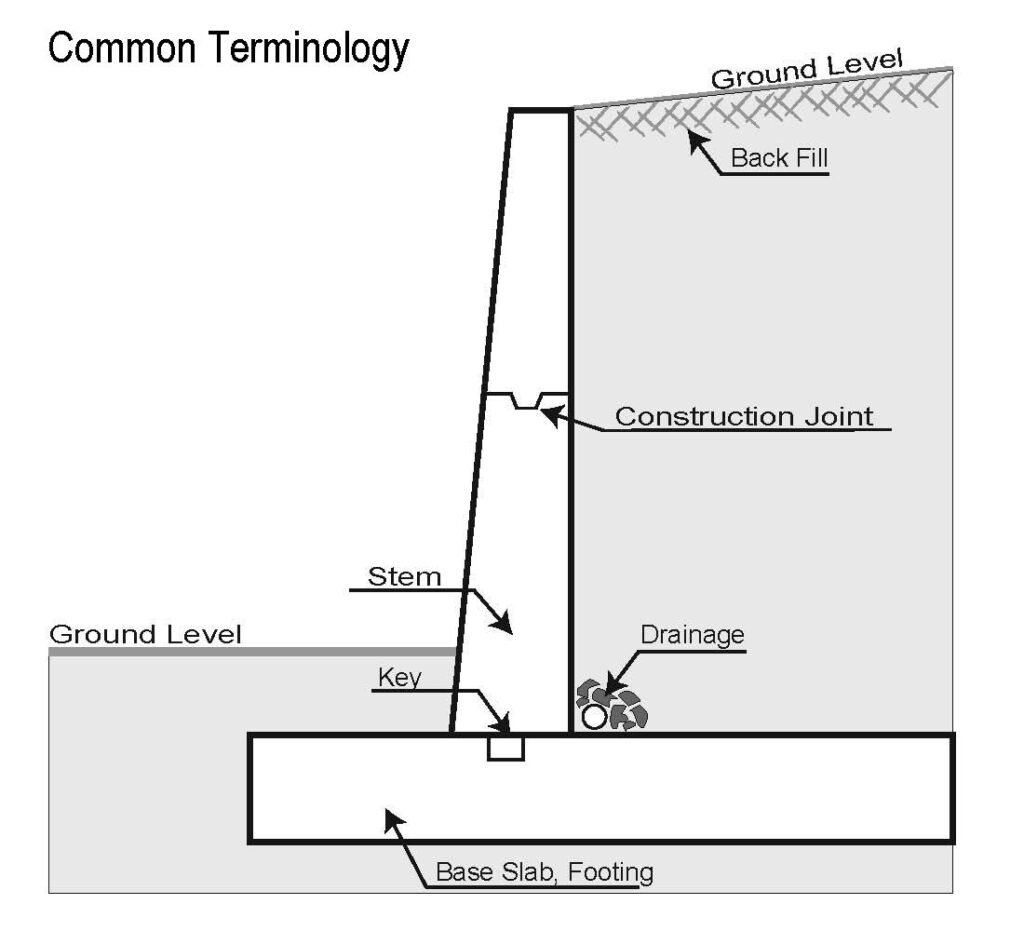
Retaining wall installation is the process of designing, excavating, and building a structure that holds back soil on a slope or grade change. The wall resists the lateral pressure that soil exerts as gravity pulls it downhill.
The process typically starts with excavation along the base of the slope. A footing or foundation is then prepared to support the weight and pressure the wall will carry over time.
Behind the wall, a drainage system is installed to move groundwater away from the structure. This usually includes gravel backfill, a perforated drain pipe, and sometimes a filter fabric to keep soil from clogging the system.
Homeowners generally need this service when a slope is actively eroding, when they want to create usable flat yard space, or when they are regrading a property for landscaping or construction.
The main benefits are slope stability, erosion control, usable outdoor space, and protection for structures located above or below the graded area.
Important considerations include wall height, soil type, drainage volume, and whether the project requires engineering review. Taller walls and walls near structures typically need more planning than a short garden wall.
Types of Retaining Wall Installation Options Available
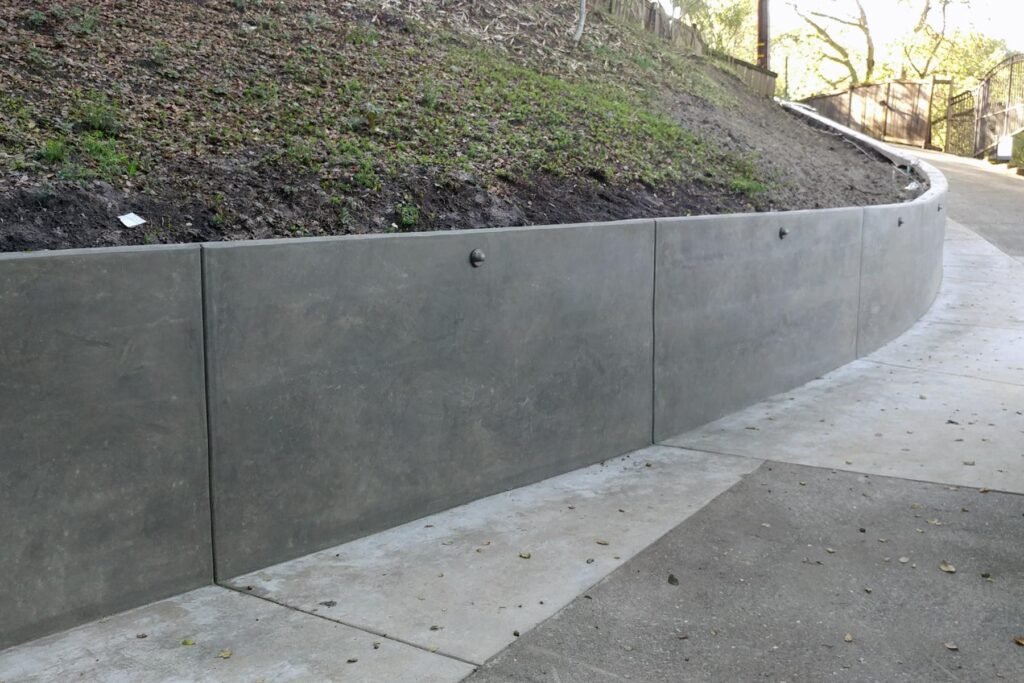
Concrete Retaining Wall Installation
Poured concrete walls offer high strength and are often used for taller walls or walls carrying significant load. They can be formed to match specific site conditions and finished in several textures or colors.
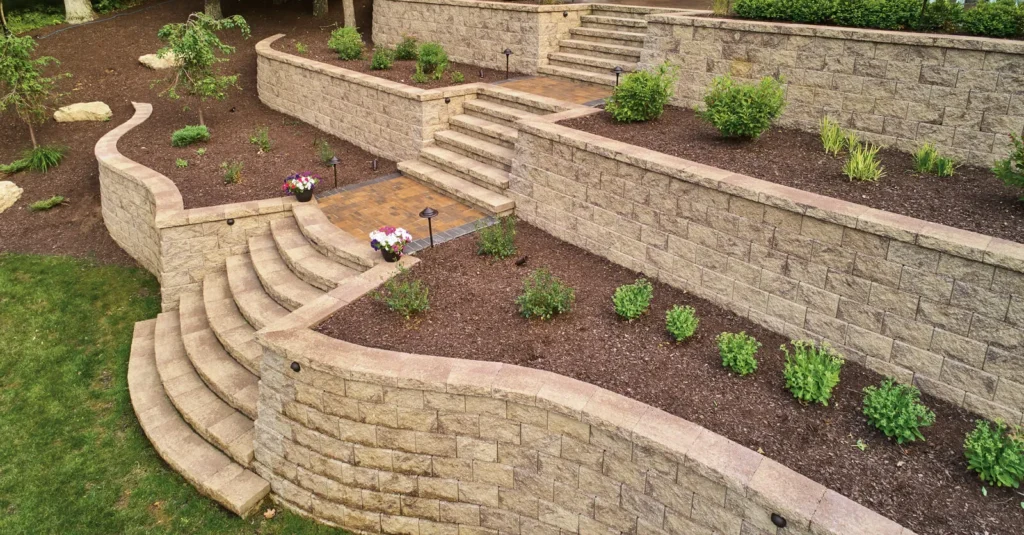
Block Retaining Wall Installation
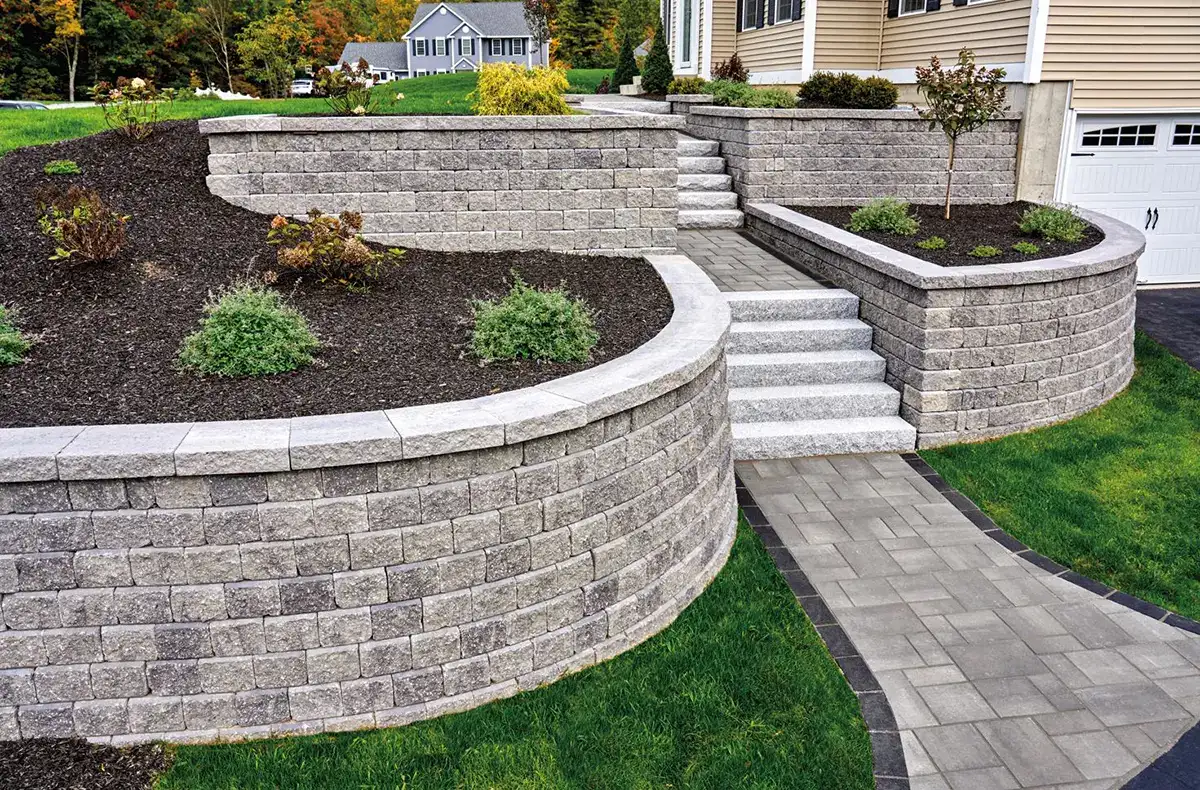
Segmental block systems use interlocking concrete units stacked without mortar. They are a common choice for mid-height residential walls because they are durable, relatively efficient to install, and available in many finishes.
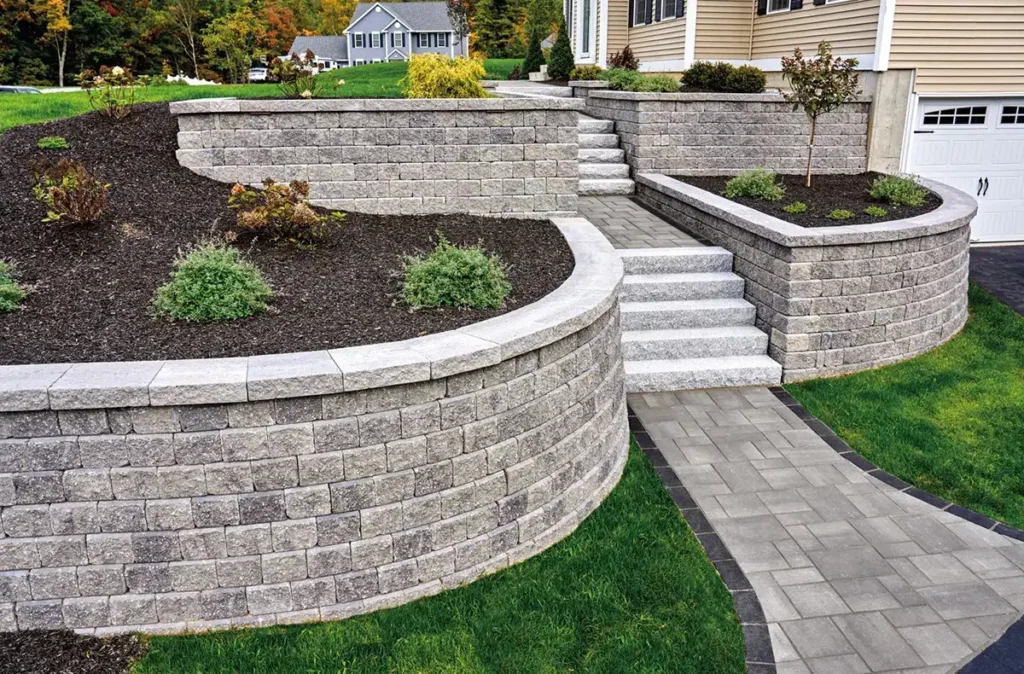
Natural Stone Retaining Wall Installation
Natural stone walls use quarried or fieldstone material, either dry-stacked or mortared depending on the design. They tend to suit homes where a more organic, landscape-integrated appearance is the goal.
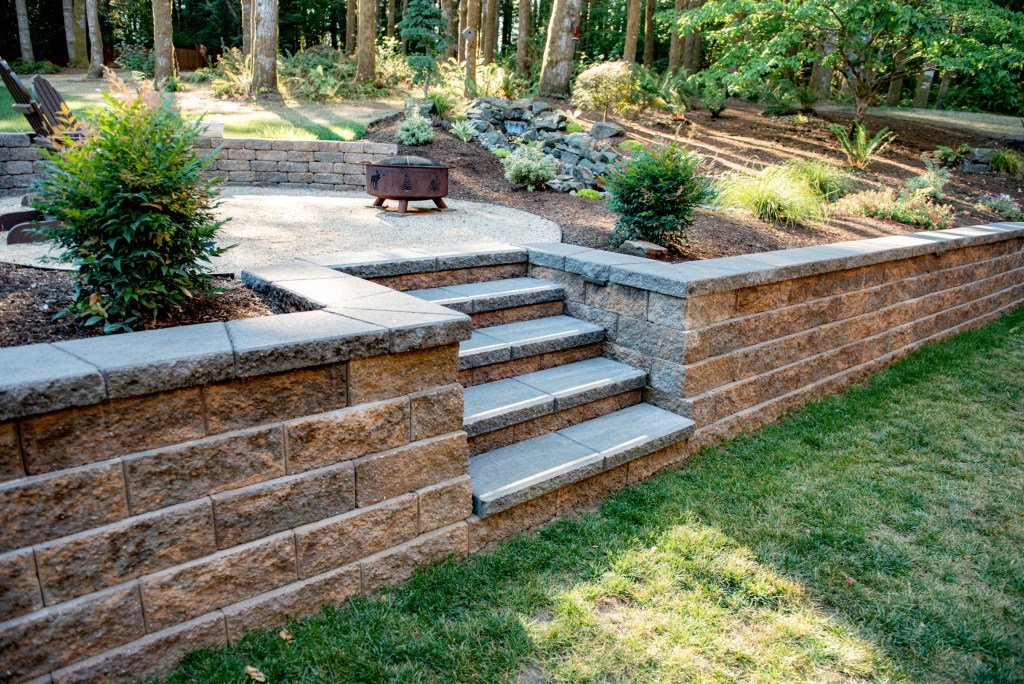
Hillside Retaining Wall Installation
Hillside walls are engineered specifically for steep slope conditions, often requiring deeper footings, reinforced backfill, and sometimes tiered wall systems rather than a single tall wall.
Gabion Retaining Wall Installation
Gabion walls use wire mesh baskets filled with rock, creating a permeable structure that allows water to pass through rather than building up hydrostatic pressure behind a solid face.
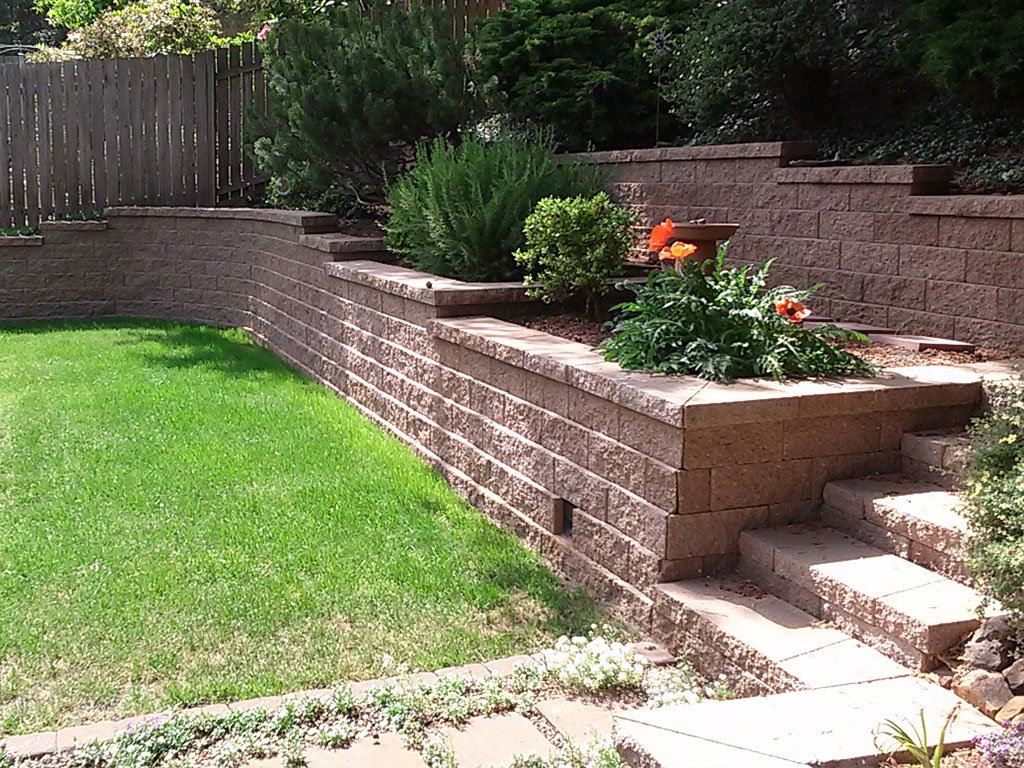
Terraced and Tiered Retaining Wall Installation
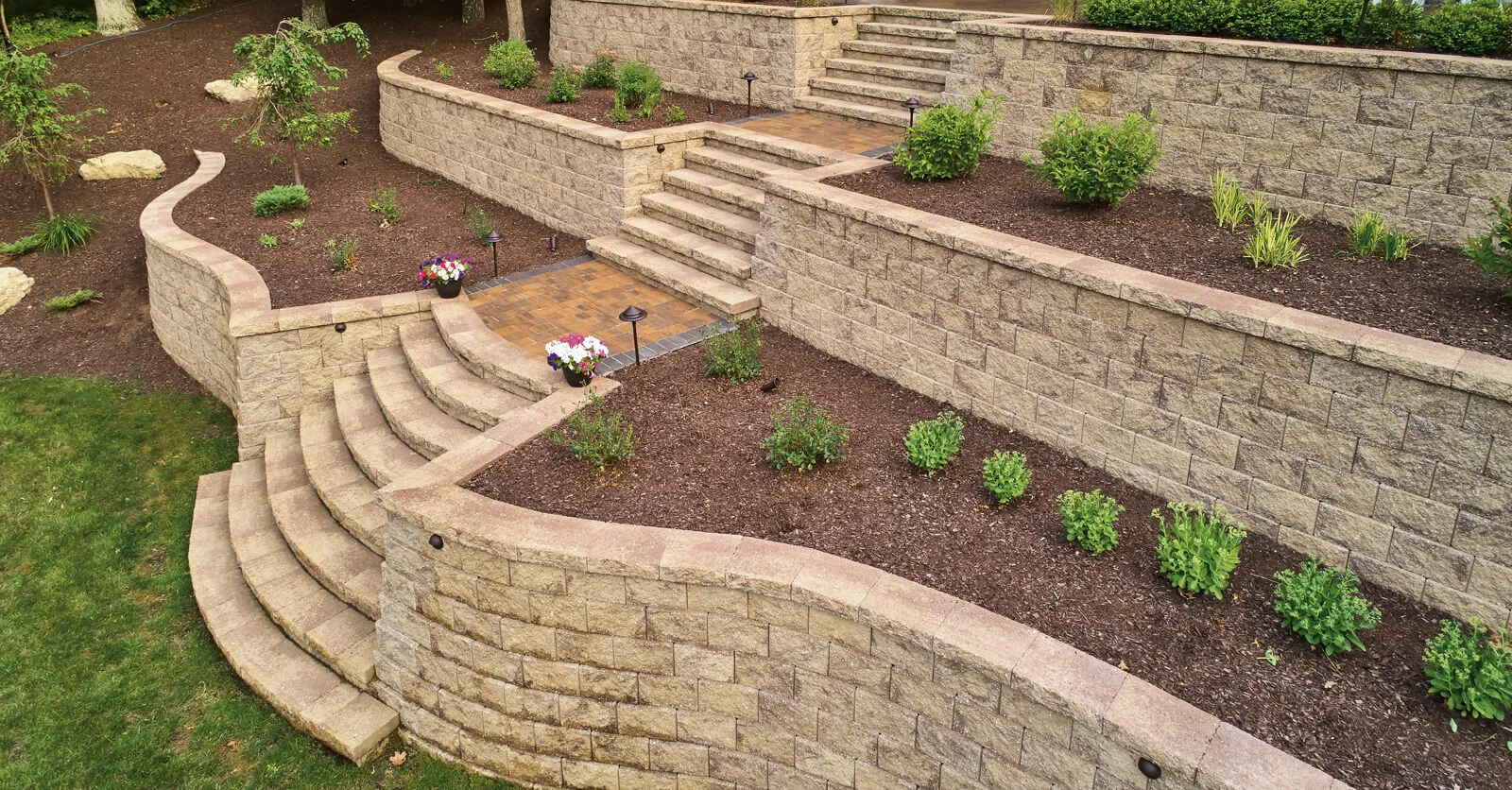
Rather than building one tall wall, a terraced system uses two or more shorter walls set back from each other up the slope, each carrying a smaller share of the load.
Benefits of Retaining Wall Installation for Mission Valley Homeowners
Improves Property Functionality
A retaining wall converts a sloped, unusable section of a yard into flat, functional space. This is especially valuable on Mission Valley lots where canyon-adjacent grading limits how much of the property can be used.
Helps Manage Slopes and Soil Movement
Slopes naturally want to move downhill under the pull of gravity, and saturated soil moves even faster. A properly engineered retaining wall resists that lateral pressure and keeps the slope in place.
Improves Drainage and Erosion Control
Uncontrolled water runoff is one of the leading causes of slope failure. A retaining wall system built with proper backfill and drain piping redirects water away from the slope face instead of letting it pool and saturate the soil.
Enhances Outdoor Appearance
Beyond function, a well-designed retaining wall improves the visual structure of a yard. Clean wall lines, tiered planting beds, and defined grade transitions give a property a more finished, intentional look.
Adds Long-Term Property Value
A properly built retaining wall protects the investment a homeowner has already made in their landscaping, hardscaping, and structures. It also signals to future buyers that slope stability has been addressed correctly.
Let's Start Your Retaining Wall Project in Mission Valley
Let’s chat about your ideas! Getting started is easy – simply reach out with details about your retaining wall project, and we’ll connect you with qualified, licensed contractors.
Retaining Wall Installation in Mission Valley, CA
Mission Valley is a centrally located San Diego neighborhood defined by its river valley setting and the steep canyon slopes that border much of the surrounding terrain. That combination of geography and development creates ongoing demand for properly engineered retaining walls.
Mission Valley at a Glance
- Location: Central San Diego, along the San Diego River valley
- Terrain: River valley floor bordered by steep canyon slopes and hillside grading
- Climate: Mediterranean climate with a distinct wet season bringing periodic heavy rainfall
- Housing: A mix of older hillside homes, newer graded developments, and dense residential and commercial construction
Areas We Serve
In addition to Mission Valley, retaining wall installation services extend to nearby San Diego communities, including Point Loma, Hillcrest, Pacific Beach, Coronado, La Jolla, Clairemont, University City, and Mira Mesa.
Why Mission Valley Properties Often Need Retaining Walls
Many homes and commercial sites in Mission Valley are built on or near graded hillsides and canyon rims, where slope stability is an ongoing consideration rather than a one-time concern.
Soil movement on these slopes can be gradual, showing up as minor cracking or settling long before a more serious failure occurs. Drainage plays a central role in preventing this, since saturated soil is far more likely to shift than soil that sheds water properly.
Erosion control is closely tied to the same issue. Slopes without a wall and drainage system in place are more exposed to runoff during rain events, which can wear away soil over time and undermine landscaping or structures above.
Retaining walls also support broader landscaping and site planning goals, giving property owners usable flat space and long-term protection for whatever is built on or near the slope.
How Much Does Retaining Wall Installation Cost in Mission Valley?
Typical Project Cost Ranges
| Project Type | Typical Cost Range | Factors Affecting Price |
|---|---|---|
| Small garden or landscape wall (under 3 ft) | $3,000 – $9,000 | Wall length, material, site access |
| Mid-size residential retaining wall (3–6 ft) | $9,000 – $25,000 | Excavation, drainage design, materials |
| Tall or engineered hillside wall (6 ft+) | $25,000 – $60,000+ | Engineering requirements, footing depth, geogrid reinforcement |
| Natural stone retaining wall | $10,000 – $40,000+ | Stone type, labor complexity, wall height |
| Retaining wall with drainage system upgrade | $12,000 – $35,000+ | Drainage volume, pipe routing, backfill material |
These ranges are broad estimates based on common project scopes. Every property is different, and actual pricing depends on the specific site conditions and design.
Factors That Affect Retaining Wall Installation Pricing
Several variables influence what a project will cost:
- Project size – Wall length and height directly affect material and labor volume.
- Materials – Concrete, block, and natural stone each carry different material and installation costs.
- Labor complexity – Curved walls, tiered designs, and tight tolerances take more time than a straight, simple wall.
- Excavation – The amount of soil that needs to be removed and hauled affects both time and cost.
- Site access – Walls in tight side yards or areas without equipment access often require more manual labor.
- Soil conditions – Rocky, expansive, or unstable soil can require additional footing work.
- Drainage requirements – More complex drainage systems add material and labor.
- Engineering requirements – Taller walls or walls near structures may require engineered drawings and permits.
- Design choices – Custom finishes, capstones, and tiered layouts add to the overall scope.
Local Mission Valley Factors That Affect Cost
Mission Valley’s terrain introduces some project-specific cost factors:
- Sloped lots often require more excavation and specialized footing work than flat properties.
- Canyon terrain can involve steeper grades that call for tiered or engineered wall systems.
- Drainage systems need to be sized for the rainfall patterns typical of the region.
- Urban property access in denser parts of the valley can limit equipment access and increase labor time.
- Existing landscaping near the work area may need protection or temporary removal.
- Soil conditions in the valley vary by lot and can affect footing depth and reinforcement needs.
- Local climate, including seasonal rain, factors into how drainage systems are designed.
Why Detailed Estimates Matter
A detailed estimate protects homeowners from unexpected costs mid-project. It should clearly outline the scope of excavation, material specifications, drainage components, and labor involved.
Transparent pricing means knowing what is included before work begins, not discovering additional charges once the wall is underway. A clear estimate also gives homeowners the ability to compare material options and understand what is driving the overall cost.
Why Choose Retaining Wall Installer Mission Valley?
Local Knowledge of Mission Valley Properties
Working regularly in this area means understanding the specific slope conditions, soil behavior, and drainage patterns that are common to Mission Valley and surrounding canyon-adjacent neighborhoods.
Quality Materials and Construction Practices
Wall longevity depends on getting the fundamentals right: proper footing depth, correctly compacted backfill, and drainage systems sized for the site. These construction practices are followed on every project.
Professional Installation Approach
Each project follows a structured process from assessment through final inspection, so homeowners know what to expect at every stage of installation.
Clear Communication From Start to Finish
Homeowners receive a detailed explanation of the project scope, material options, and pricing before work begins, with clear communication throughout construction.
Homeowner-Focused Service
The goal on every project is a wall that performs correctly for the long term, not just one that looks acceptable on installation day.
Need Help?
Frequently Asked Questions About Retaining Wall Installation in Mission Valley
Below are some of the most common questions Our Network get from families about Retaining Wall. If you have any other questions contact us!
How much does retaining wall installation cost in Mission Valley in 2026?
As of 2026, a small garden wall under 3 feet typically runs $3,000 to $9,000, a mid-size 3-6 foot residential wall runs $9,000 to $25,000, and a tall engineered hillside wall over 6 feet can run $25,000 to $60,000 or more. Material, wall height, and drainage complexity are the biggest swing factors, so an on-site estimate is the only way to get a number specific to your slope.
How long does retaining wall installation take?
A small wall under 3 feet can often be completed in 3 to 5 working days, a mid-size 3-6 foot wall typically takes 1 to 2 weeks, and a tall engineered hillside wall with tiered sections or geogrid reinforcement can take 3 to 6 weeks. Weather delays are more likely between November and March, when Mission Valley sees most of its annual rainfall.
What materials are used for retaining walls, and how do costs compare?
Segmental concrete block generally runs $25 to $45 per square foot installed, poured concrete runs $30 to $55 per square foot, and natural stone runs $35 to $70 per square foot depending on the stone type and labor involved. Block is the most common choice for walls up to about 6 feet due to its balance of cost and strength.
Do retaining walls need drainage systems, and how are they sized?
Yes. A typical residential wall drainage system uses a 4-inch perforated drain pipe embedded in at least 12 inches of washed gravel backfill behind the wall face, daylighted to a safe outlet point. Undersized or missing drainage is one of the most common reasons walls fail within the first 5 to 10 years.
What causes a retaining wall to fail?
The most common causes are footings poured less than the required depth for the wall height (often under 12 inches on walls that need more), missing or clogged drain pipe, poorly compacted backfill, and walls built without geogrid reinforcement on slopes steeper than about 2:1. Most failures take 2 to 5 years to become visible after the underlying issue starts.
How long does a properly installed retaining wall last?
A wall built with correct footing depth, compacted backfill, and working drainage typically lasts 50 to 100 years for concrete or block, and can exceed 100 years for well-built natural stone. Walls that skip proper drainage often show problems within 10 to 15 years, regardless of the material used.
Are permits required for retaining wall installation in San Diego?
In San Diego, walls over 4 feet in height (measured from the bottom of the footing to the top of the wall) generally require a permit and engineered plans, while shorter walls may not, but this depends on site-specific factors like slope and surcharge loads. Permit requirements should be confirmed with the City of San Diego Development Services Department before construction begins.
Contact Retaining Wall Installer Mission Valley Today
Mission Valley’s hillside and canyon-adjacent terrain makes properly engineered retaining wall installation a practical investment for many homeowners in the area. Whether the goal is stabilizing a slope, controlling drainage, or creating new usable yard space, the right wall system starts with a clear understanding of the property.
A free, no-pressure consultation is available to walk through the site, discuss material options, and provide a detailed estimate. This service extends to Mission Valley and surrounding communities, including Point Loma, Hillcrest, Pacific Beach, Coronado, La Jolla, Clairemont, University City, and Mira Mesa.