
Block Retaining Walls in Mission Valley, CA
Trusted Block Retaining Walls in Mission Valley, CA for Slopes, Yards, and Hillside Lots
What Are Block Retaining Walls?
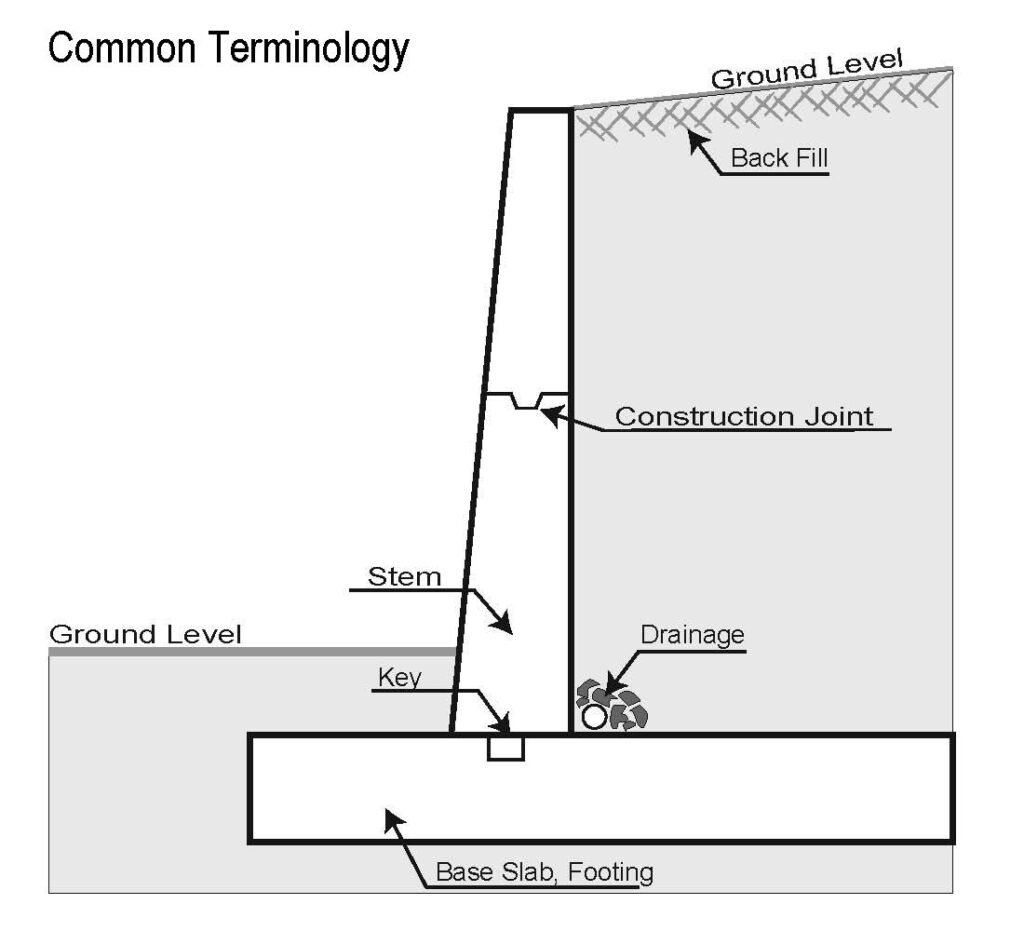
Block retaining walls are structures built from precast, interlocking concrete units stacked in courses without mortar, relying on unit weight, friction, and mechanical interlock to resist lateral soil pressure.
Construction typically begins with excavation and a compacted gravel or crushed stone base, since a level, well-compacted foundation is essential to the wall’s long-term stability.
Behind the wall, gravel backfill and a perforated drain pipe are installed to manage groundwater, and for taller walls, geogrid layers are often incorporated between courses to add reinforcement.
Homeowners generally choose block when they want a durable, efficient wall system for slopes up to moderate heights, with a range of finish options to match different landscaping styles.
The main benefits are strong performance for the cost, a faster installation timeline than poured concrete, and design flexibility that includes curves, corners, and stepped configurations.
Important considerations include base preparation, whether geogrid reinforcement is needed for the wall height, and drainage design, since these factors determine how well the wall performs over time.
Types of Block Retaining Wall Options Available
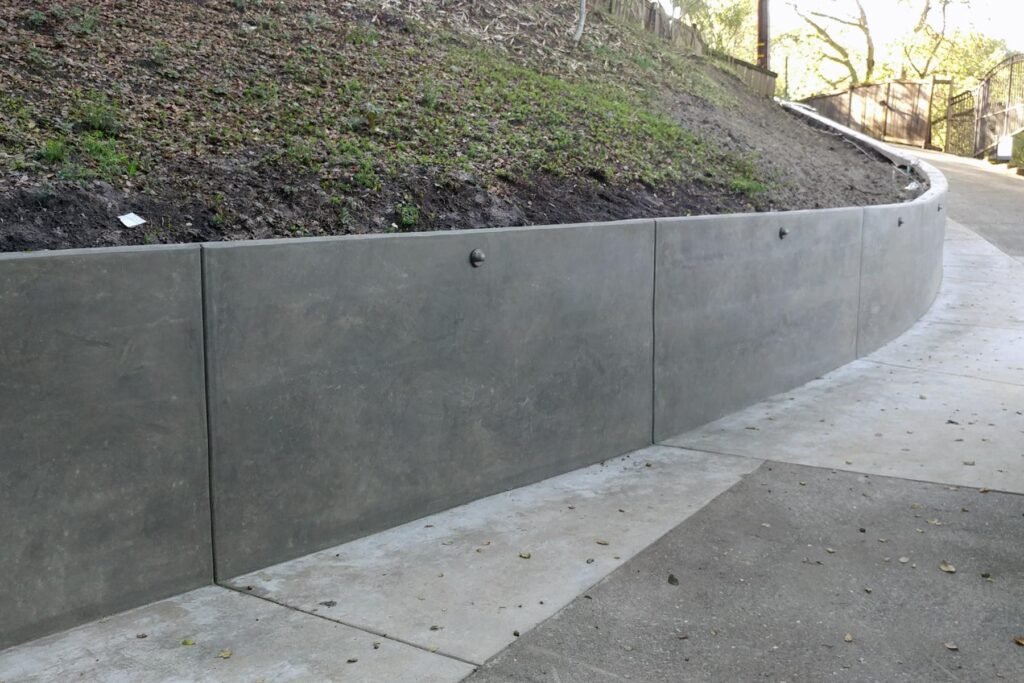
Segmental Interlocking Block Walls
Segmental block systems use units with built-in lips, pins, or interlocking geometry that automatically set the correct setback as each course is stacked.
This is the most common block wall type for residential projects, offering reliable performance for walls up to about 4 to 6 feet without additional reinforcement.
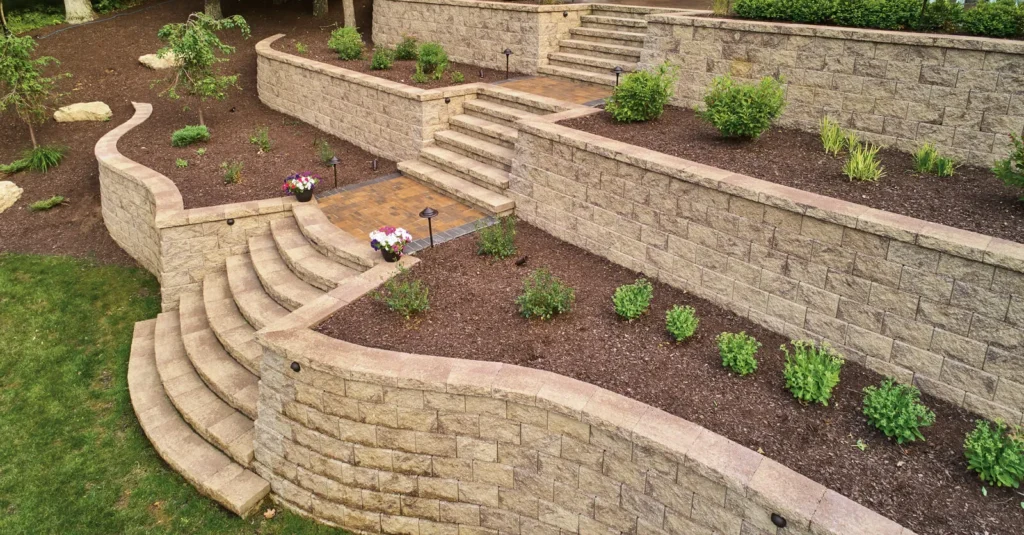
Split-Face Block Retaining Walls
Split-face blocks have a textured, rough-cut face that mimics the look of natural stone while retaining the consistent dimensions and interlocking strength of manufactured block.
This option suits homeowners who want a more natural aesthetic without the higher labor cost typically associated with true natural stone construction.
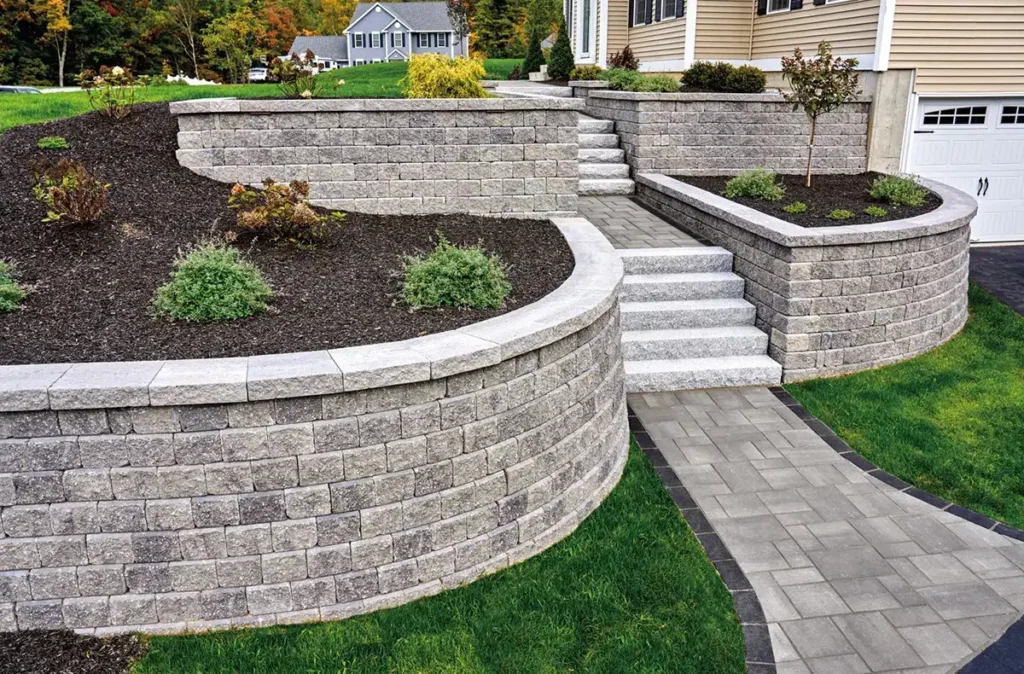
Large Modular Block Walls
Large modular block, sometimes called big block, uses oversized concrete units that can weigh several hundred pounds each, allowing taller walls to be built with fewer courses.
This system is often used for steeper Mission Valley hillside applications or commercial sites where wall height and speed of installation are priorities.
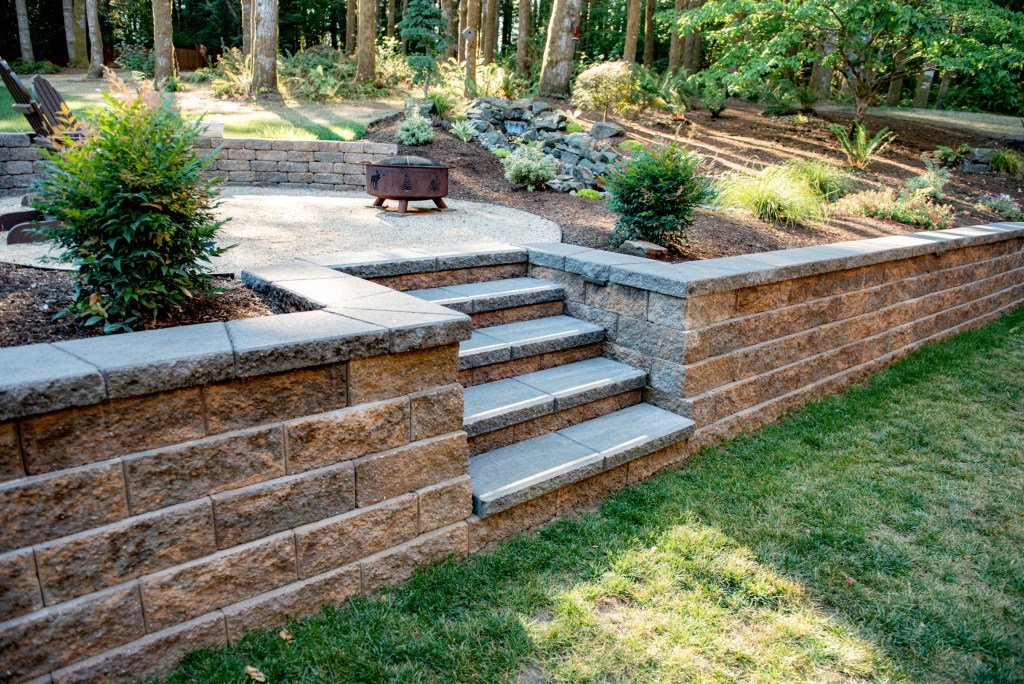
Geogrid-Reinforced Block Walls
For walls taller than about 4 feet, or on steeper slopes, geogrid layers are installed between courses and extended back into the compacted backfill to add resistance against soil movement.
This approach is common on Mission Valley canyon-adjacent lots, where slope angle alone can exceed what an unreinforced block wall can safely resist.
Terraced Block Wall Systems
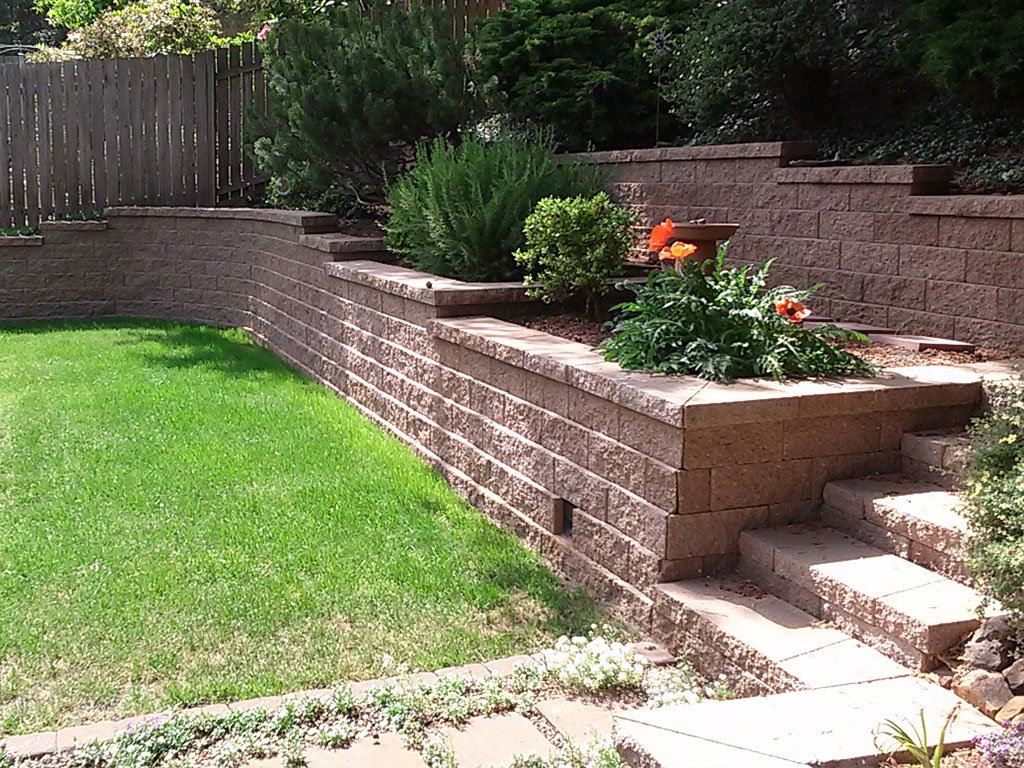
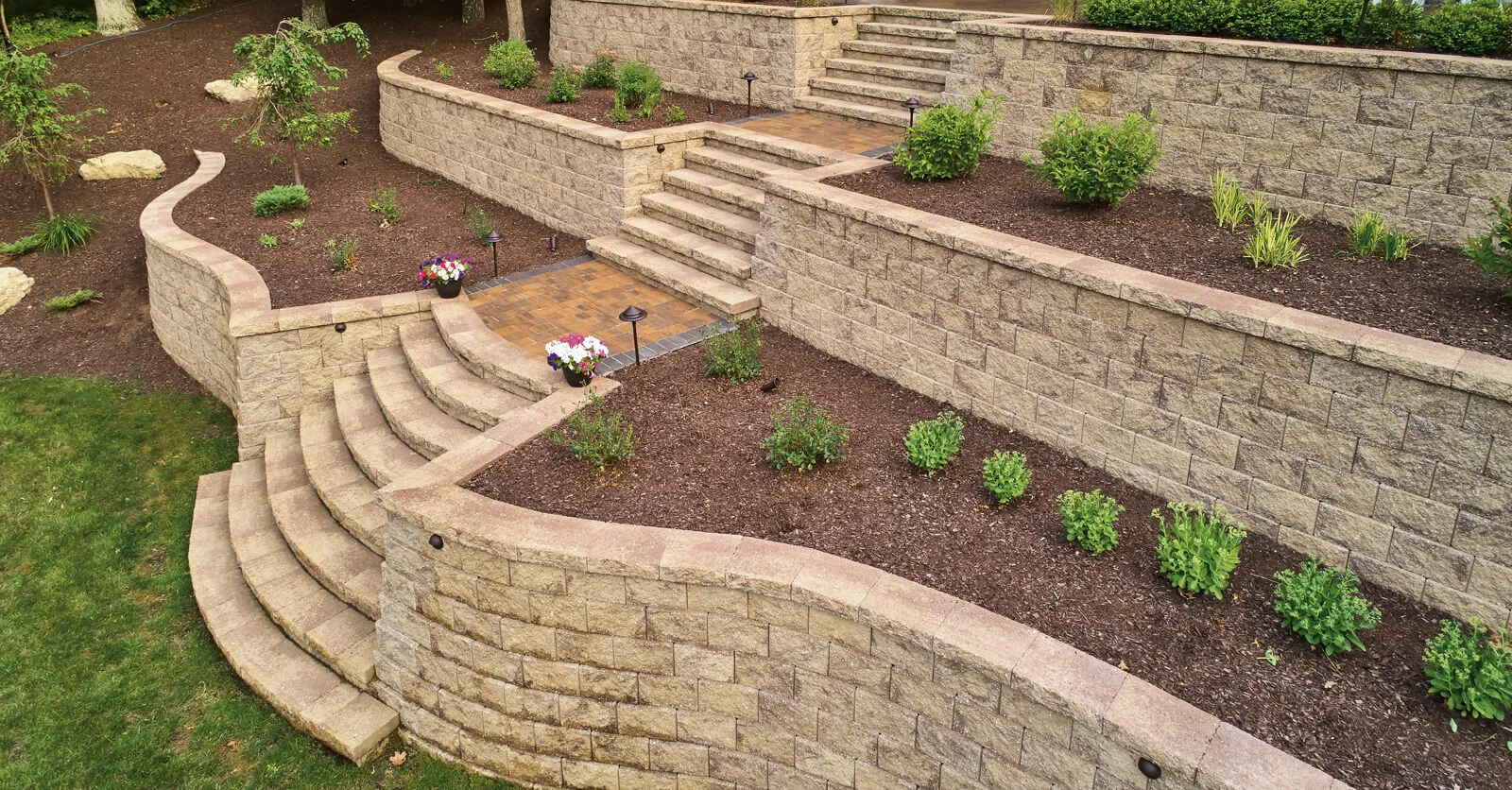
Rather than one tall block wall, a terraced system uses two or more shorter block walls set back from each other up the slope, each carrying a smaller share of the soil pressure.
This approach works well on steep Mission Valley properties and creates multiple flat planting or usable areas up the grade instead of a single large vertical face.
Decorative and Architectural Block Walls
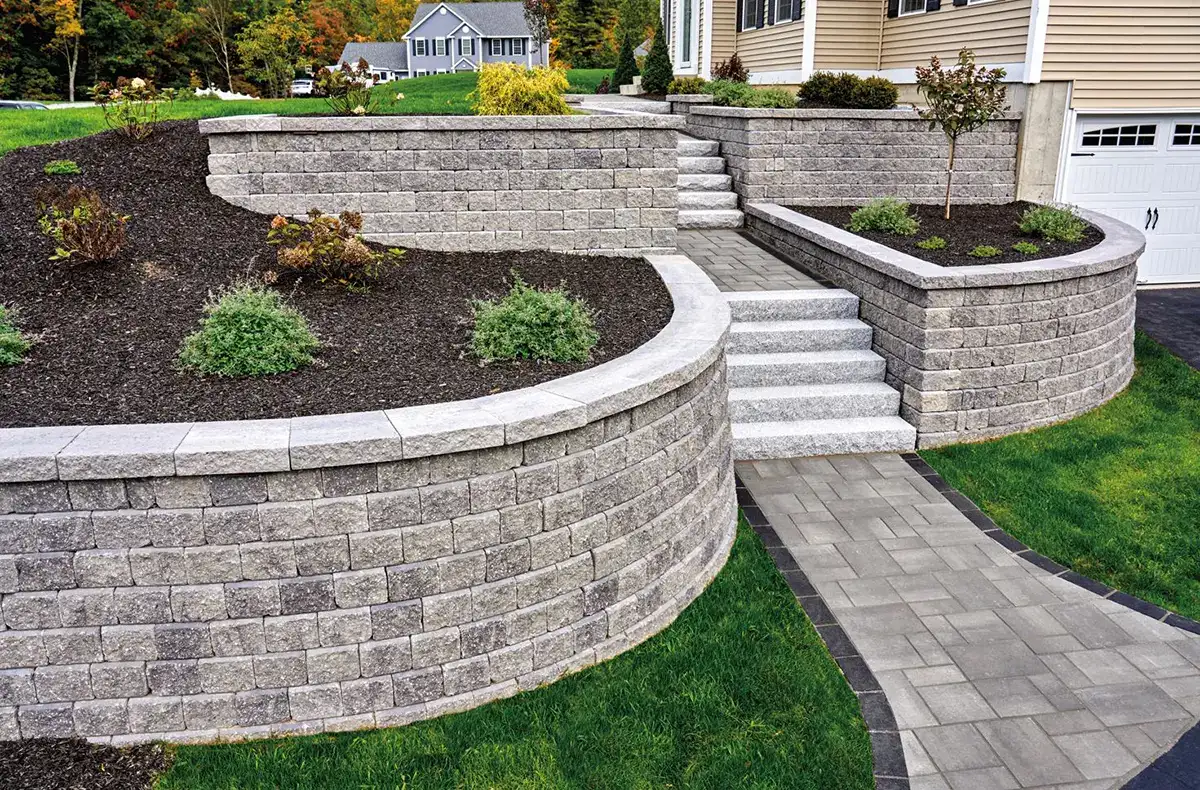
Architectural block systems combine structural block cores with decorative caps, corner units, and color-blended faces designed for prominent, highly visible areas of a property.
This option is often chosen for front-yard walls, entry features, or commercial sites where appearance carries as much weight as structural performance.
Benefits of Block Retaining Walls for Mission Valley Homeowners
Improves Property Functionality
A block retaining wall converts a sloped, unusable section of a yard into flat, functional space for patios, gardens, or additional outdoor living area.On Mission Valley's graded lots, block's efficient installation timeline often means usable yard space is restored faster than with poured concrete alternatives.
Helps Manage Slopes and Soil Movement
Interlocking block units, combined with proper base compaction and setback, resist the lateral pressure soil exerts as it moves downhill under gravity, especially when saturated.This makes block a common choice for hillside and canyon-adjacent properties near Mission Valley, particularly when paired with geogrid reinforcement on steeper grades.
Improves Drainage and Erosion Control
Block wall systems are naturally suited to proper drainage design, since the gap behind each course allows gravel backfill and drain piping to be installed as the wall is built.This matters most during Mission Valley's winter rain season, when concentrated rainfall puts the greatest stress on both the wall structure and its drainage system.
Enhances Outdoor Appearance
Block systems are available in a wide range of textures and colors, from smooth modern finishes to textured split-face units that resemble natural stone.This variety gives homeowners flexibility to match the wall's appearance to the architectural style of the home without sacrificing structural performance.
Adds Long-Term Property Value
A properly built block wall protects the investment already made in landscaping, hardscaping, and structures that depend on the wall for stability.In Mission Valley, where hillside and graded lots are common, a well-constructed block wall can be a meaningful point of confidence for future buyers evaluating slope stability.
Let's Start Your Retaining Wall Project in Mission Valley
Let’s chat about your ideas! Getting started is easy – simply reach out with details about your retaining wall project, and we’ll connect you with qualified, licensed contractors.
Block Retaining Walls in Mission Valley, CA
Mission Valley is a centrally located San Diego neighborhood defined by its river valley setting and the steep canyon slopes that border much of the surrounding terrain. That combination of geography and development creates strong, ongoing demand for block retaining wall systems.
Mission Valley at a Glance
- Location: Central San Diego, along the San Diego River valley
- Terrain: River valley floor bordered by steep canyon slopes and hillside grading
- Climate: Mediterranean climate with a distinct wet season bringing periodic heavy rainfall
- Housing: A mix of older hillside homes, newer graded developments, and dense residential and commercial construction
Areas We Serve
In addition to Mission Valley, block retaining wall services extend to nearby San Diego communities, including Point Loma, Hillcrest, Pacific Beach, Coronado, La Jolla, Clairemont, University City, and Mira Mesa.
Why Mission Valley Properties Often Choose Block Retaining Walls
Many homes and commercial sites in Mission Valley are built on or near graded hillsides and canyon rims, where block’s combination of strength and efficient installation makes it a practical fit for a wide range of slope conditions.
Base preparation is especially important on Mission Valley’s variable soil conditions, since a properly compacted gravel base is what allows a block wall to resist soil pressure reliably over time.
Drainage remains central to block wall performance, since saturated soil during Mission Valley’s wet season places significant pressure on any retaining structure regardless of material.
Block walls also support broader site planning goals, giving property owners a durable, visually flexible option for reclaiming usable space on sloped or canyon-adjacent terrain.
How Much Do Block Retaining Walls Cost in Mission Valley?
Typical Project Cost Ranges
| Project Type | Typical Cost Range | Factors Affecting Price |
|---|---|---|
| Segmental block wall (under 4 ft) | $6,000 – $16,000 | Wall length, block type, base preparation |
| Split-face block wall | $8,000 – $22,000 | Finish selection, wall height, site access |
| Large modular block wall | $15,000 – $40,000 | Block size, equipment access, excavation |
| Geogrid-reinforced block wall (4-6 ft) | $14,000 – $32,000 | Reinforcement layers, backfill volume, slope angle |
| Terraced block wall system | $18,000 – $45,000+ | Number of tiers, total height, drainage design |
| Decorative or architectural block wall | $10,000 – $28,000 | Cap and corner units, color blending, finish detail |
These ranges are broad estimates based on common project scopes. Actual pricing depends on wall height, reinforcement needs, and site-specific conditions.
Factors That Affect Block Retaining Wall Pricing
Several variables influence what a block wall project will cost:
- Wall height – Taller walls require more courses, base preparation, and often geogrid reinforcement.
- Block type – Standard segmental, split-face, and large modular units carry different material costs.
- Base preparation – A properly compacted gravel base is essential and affects excavation depth and labor.
- Excavation – The volume of soil removed for base and backfill work affects both time and cost.
- Site access – Block delivery and equipment access can be more difficult on tight or sloped lots.
- Soil conditions – Rocky or expansive soil can require additional base preparation.
- Drainage requirements – Larger contributing drainage areas need more robust backfill and piping systems.
- Reinforcement needs – Geogrid layers add material and labor cost but are often necessary above 4 feet.
Local Mission Valley Factors That Affect Cost
Mission Valley’s terrain introduces some project-specific cost factors for block wall construction:
- Sloped lots often require more excavation and base preparation than flat properties.
- Canyon terrain can involve steeper grades that call for geogrid reinforcement or a terraced design.
- Drainage systems need to be sized for the rainfall patterns typical of the region.
- Urban property access in denser parts of the valley can limit equipment access for large modular block.
- Existing landscaping near the work area may need protection or temporary removal.
- Soil conditions in the valley vary by lot and can affect base depth and reinforcement needs.
- Local climate, including seasonal rain, factors into how drainage systems are sized and designed.
Why Detailed Estimates Matter
A detailed estimate for a block retaining wall should clearly outline base preparation depth, block type, geogrid requirements, and drainage components before work begins.
Transparent pricing means understanding exactly what base and reinforcement specifications are included, which helps homeowners avoid unexpected costs once excavation begins.
Why Choose Retaining Wall Installer Mission Valley?
Local Knowledge of Mission Valley Properties
Working regularly in this area means understanding the specific slope conditions, soil behavior, and drainage patterns that affect block retaining wall performance in Mission Valley and surrounding canyon-adjacent neighborhoods.
Quality Materials and Construction Practices
Block wall longevity depends on getting the fundamentals right: a properly compacted base, correct course setback, and drainage systems sized for the site. These practices are followed on every project.
Professional Installation Approach
Each block wall project follows a structured process from assessment through final inspection, so homeowners know what to expect at every stage of construction.
Clear Communication From Start to Finish
Homeowners receive a detailed explanation of base preparation, reinforcement, and pricing before work begins, with clear communication throughout construction.
Homeowner-Focused Service
The goal on every block wall project is a structure that performs correctly for the long term, not just one that looks acceptable on installation day.
Need Help?
Frequently Asked Questions About Block Retaining Walls in Mission Valley
Below are some of the most common questions Our Network get from families about Retaining Wall. If you have any other questions contact us!
How much do block retaining walls cost in Mission Valley in 2026?
As of 2026, a segmental block wall under 4 feet typically runs $6,000 to $16,000, a split-face block wall runs $8,000 to $22,000, and a taller geogrid-reinforced block wall between 4 and 6 feet runs $14,000 to $32,000. Block type, wall height, and reinforcement needs are the biggest factors, so an on-site estimate is needed for accurate pricing.
How tall can a block retaining wall be built without reinforcement?
Most segmental block walls can be built to about 3 to 4 feet without additional reinforcement, while walls taller than that typically require geogrid layers extending into the compacted backfill to safely resist soil pressure. Walls over roughly 4 feet in San Diego generally require engineered plans and permit review.
How does block compare to poured concrete for retaining walls?
Block generally installs faster than poured concrete since there’s no forming or curing time, and typically runs $25 to $45 per square foot installed compared to $30 to $55 for poured concrete. Poured concrete can offer higher strength per square foot for very tall or heavily loaded walls, while block offers strong performance and a shorter timeline for most residential heights.
How long does block retaining wall construction take?
A small segmental block wall under 4 feet can often be completed in 3 to 7 working days, while a taller geogrid-reinforced or terraced block wall can take 2 to 4 weeks depending on height and complexity.
Do block retaining walls need drainage systems?
Yes. A typical block wall drainage system uses a 4-inch perforated drain pipe embedded in at least 12 inches of washed gravel backfill directly behind the block, daylighted to a safe outlet point. Without this, water pressure can build up and push blocks out of alignment over time.
Can an existing block retaining wall be repaired instead of replaced?
Individual displaced or cracked blocks can often be replaced without rebuilding the full wall, while a wall showing widespread bulging or leaning more than 1 to 2 inches out of plumb typically needs more significant structural repair. A site evaluation determines which approach applies.
Are permits required for block retaining wall construction in San Diego?
In San Diego, walls over 4 feet in height, measured from the bottom of the base to the top of the wall, generally require a permit and engineered plans, while shorter walls may not. Permit requirements should be confirmed with the City of San Diego Development Services Department before construction begins.
Contact Retaining Wall Installer Mission Valley Today
Mission Valley’s hillside and canyon-adjacent terrain makes block retaining walls a practical choice for homeowners who want a strong, efficient solution with a wide range of finish options. Whether the goal is stabilizing a moderate slope or building a terraced system on a steeper grade, the right block wall design starts with a clear understanding of the property.
A free, no-pressure consultation is available to walk through the site, discuss block type and reinforcement options, and provide a detailed estimate. This service extends to Mission Valley and surrounding communities, including Point Loma, Hillcrest, Pacific Beach, Coronado, La Jolla, Clairemont, University City, and Mira Mesa.