
Natural Stone Retaining Walls in Mission Valley, CA
Trusted Natural Stone Retaining Walls in Mission Valley, CA for Slopes, Gardens, and Hillside Lots
What Are Natural Stone Retaining Walls?
Natural stone retaining walls are structures built from quarried or fieldstone material, either dry-stacked using interlocking placement and gravity or mortared together for additional bonding strength.
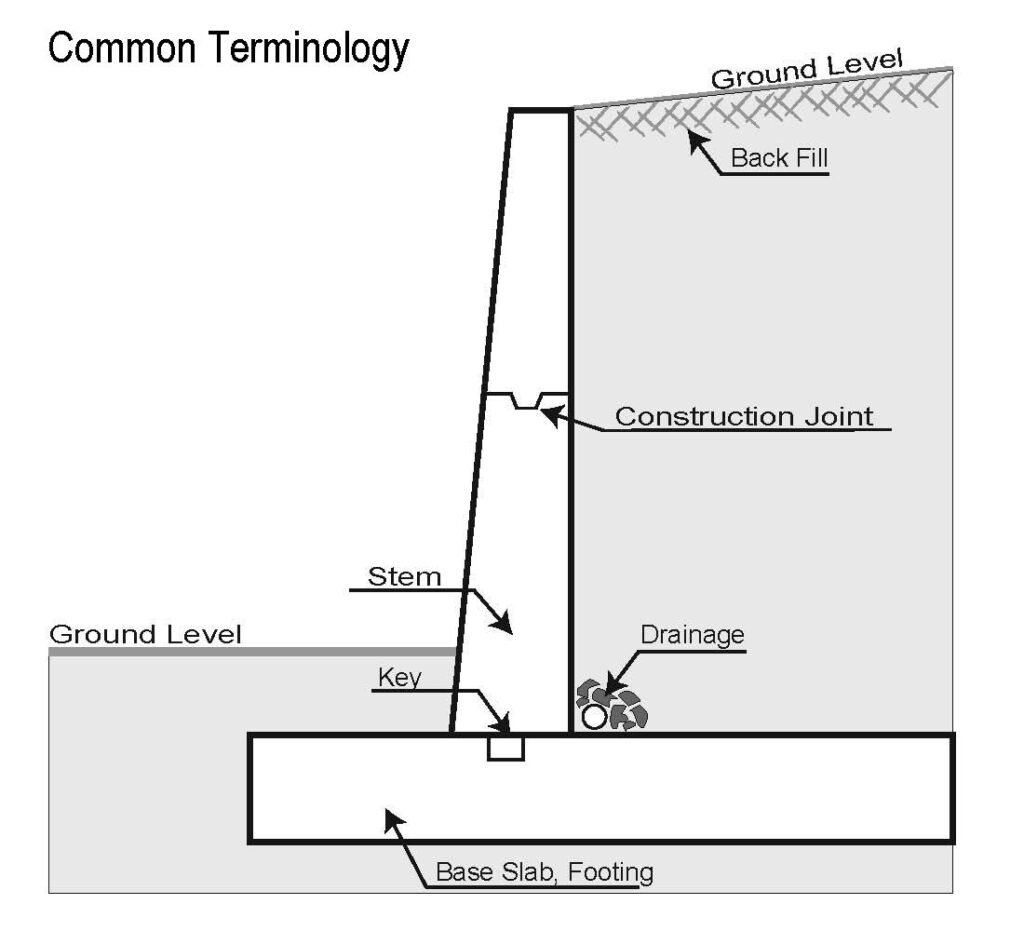
Construction typically begins with excavation and a compacted base, since a stable, level foundation is essential regardless of whether the wall will be dry-stacked or mortared.
Behind the wall, drainage is managed through gravel backfill and, for mortared walls, a perforated drain pipe with weep holes built into the face to relieve water pressure.
Homeowners generally choose natural stone when appearance is a priority alongside structural performance, particularly for gardens, entry features, or terraced landscaping.
The main benefits are a distinctive, non-repeating appearance, strong durability when properly built, and the ability to integrate naturally with existing landscaping and hardscape features.
Important considerations include stone selection, whether the design will be dry-stacked or mortared, and base preparation, since these factors determine both the wall’s appearance and its long-term stability.
Types of Natural Stone Retaining Wall Options Available
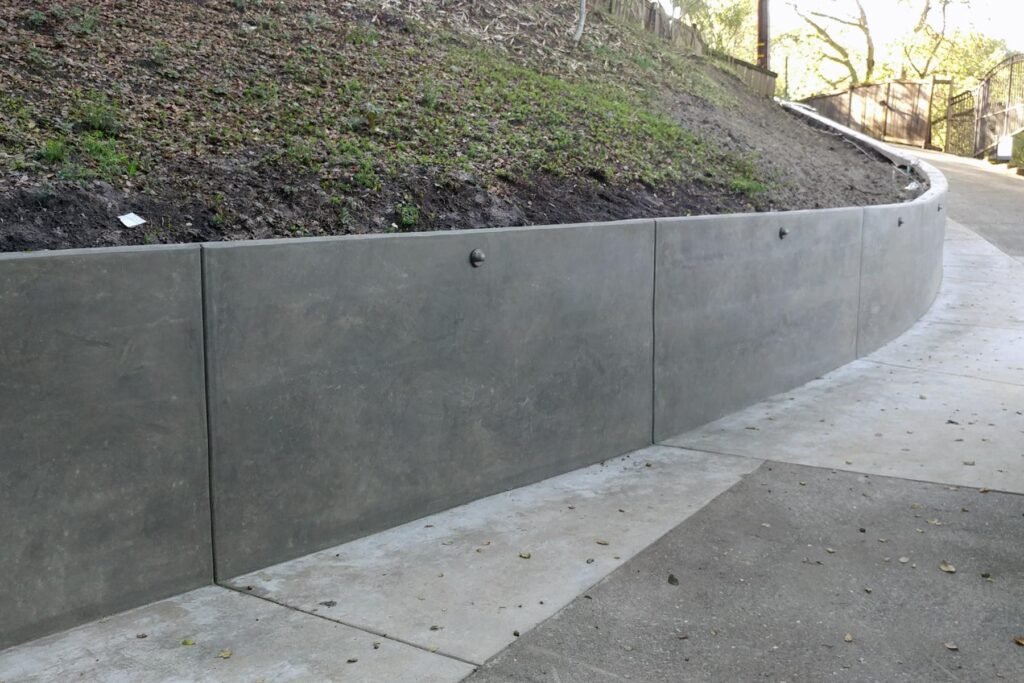
Dry-Stack Fieldstone Walls
Dry-stack walls are built without mortar, relying on carefully selected and placed stones that interlock through weight, friction, and shape to resist soil pressure.
This method suits shorter walls, typically under about 3 to 4 feet, and offers a natural, permeable structure well suited to garden and landscape applications.
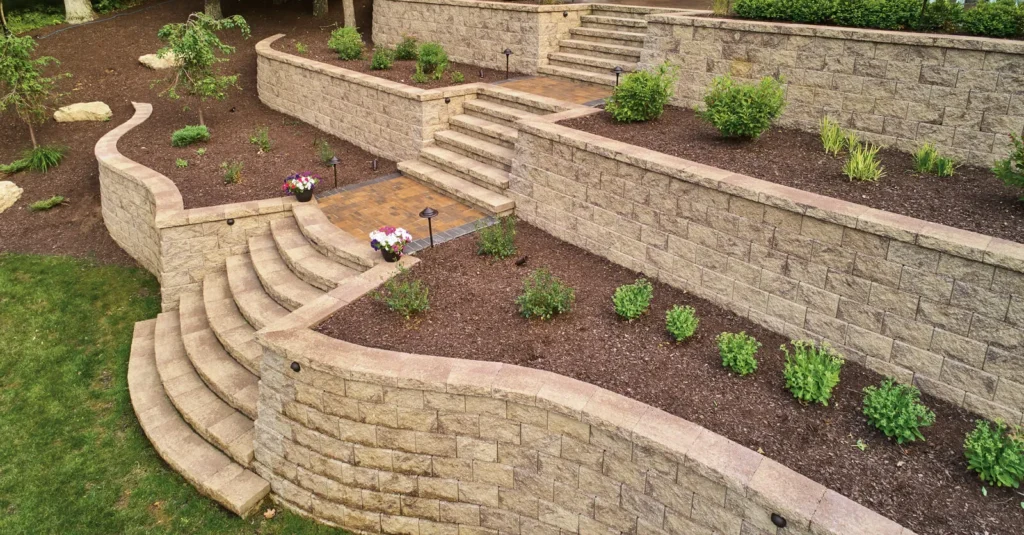
Mortared Natural Stone Walls
Mortared stone walls use mortar joints to bond individual stones together, adding structural strength that allows for taller walls than dry-stack construction typically supports.
This option is often chosen for walls that need to carry more soil pressure or that are located in more visible, formal areas of a property.
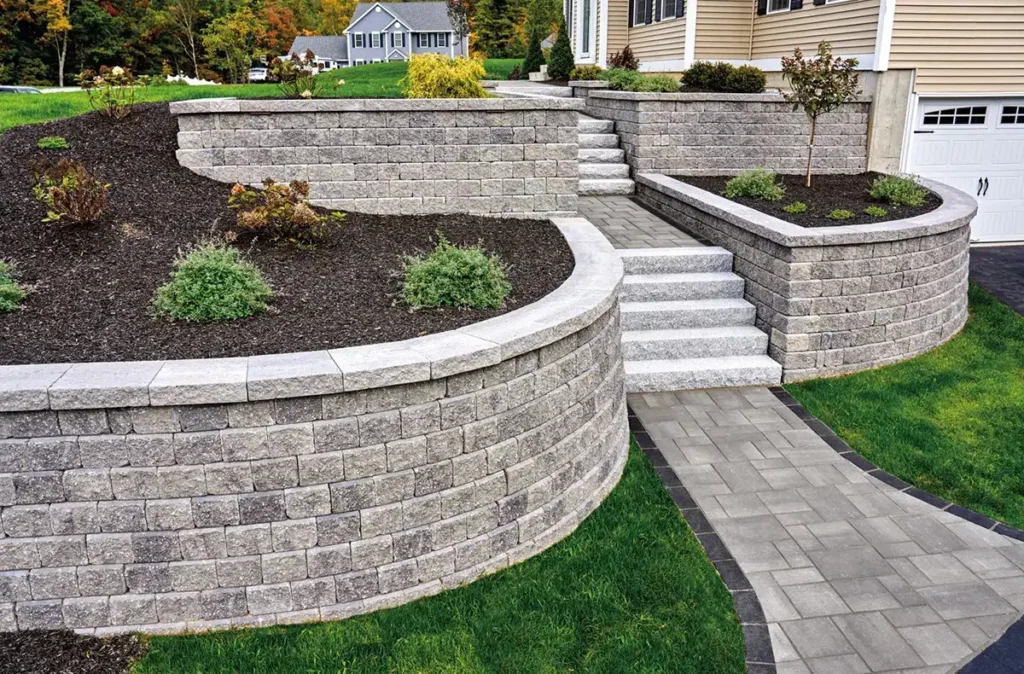
Boulder Retaining Walls
Boulder walls use large individual rocks, often several hundred pounds or more, stacked and positioned to resist soil pressure through their significant mass.
This approach works well on steeper Mission Valley hillside sites where a rugged, natural appearance is desired alongside strong structural performance.
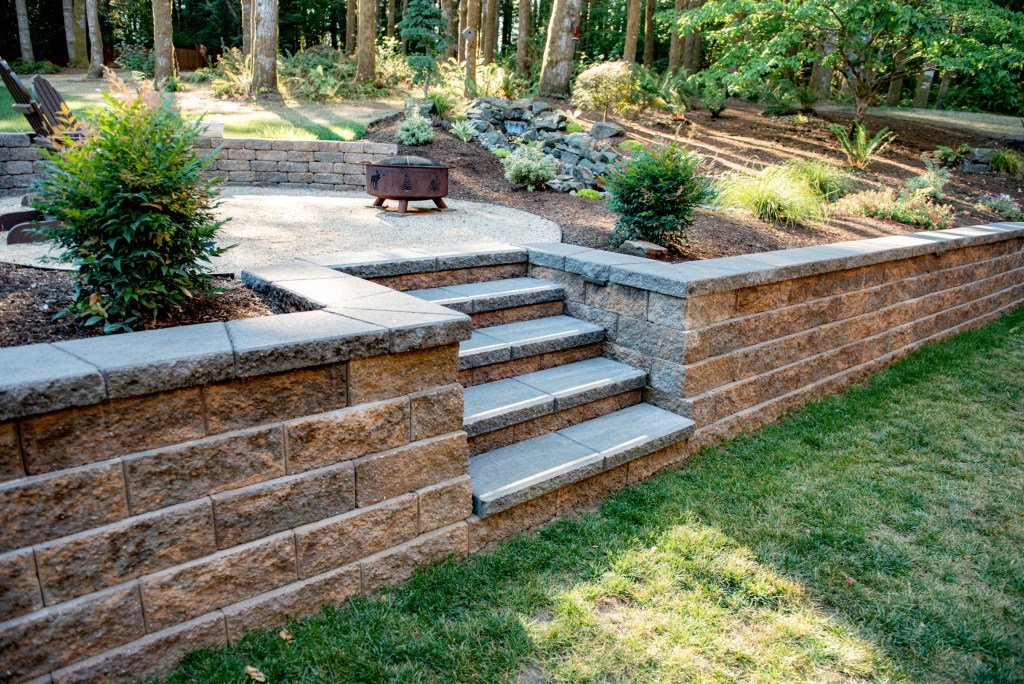
Stone Veneer Over Structural Core Walls
This approach uses a structural core, typically concrete or block, faced with natural stone veneer to combine the strength of an engineered wall with the appearance of natural stone.
It’s a practical option for taller walls where full natural stone construction would be cost-prohibitive or structurally impractical, while still achieving a stone aesthetic.
Flagstone and Ashlar Cut-Stone Walls
Flagstone and ashlar walls use stone cut or selected for relatively flat, consistent faces, creating a more uniform, refined appearance than fieldstone or boulder construction.
This option suits homeowners who want the natural material appeal of stone with a cleaner, more structured look, often used for formal garden or entry wall applications.
Terraced Natural Stone Wall Systems
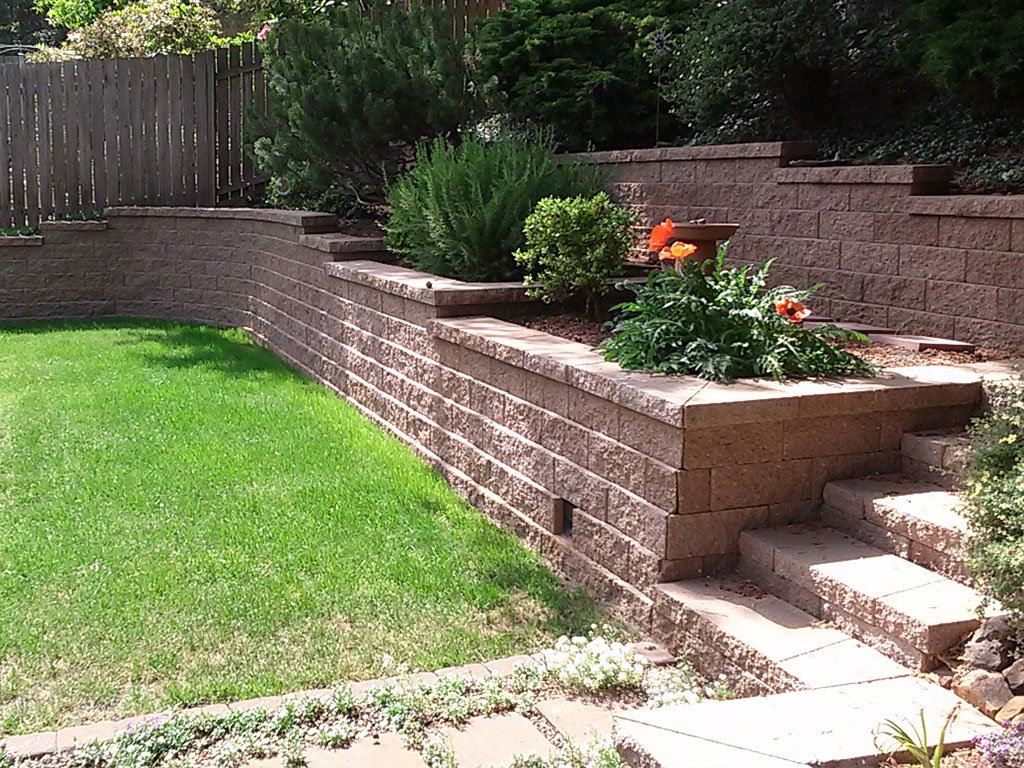
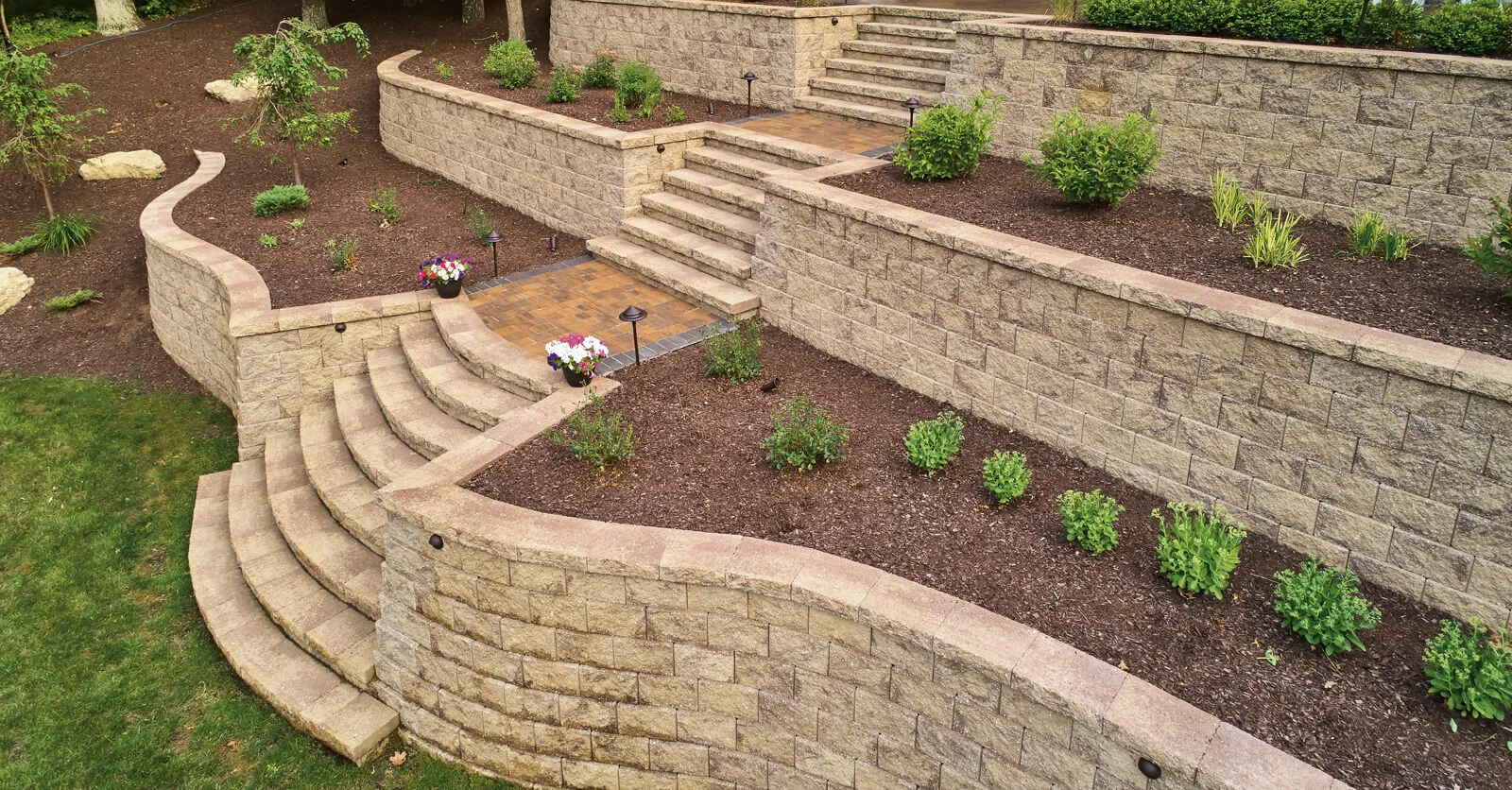
Rather than one tall stone wall, a terraced system uses two or more shorter stone walls set back from each other up the slope, each carrying a smaller share of the soil load.
This approach is common on steep Mission Valley canyon-adjacent lots and creates multiple flat garden or seating areas up the grade instead of a single large stone face.
Benefits of Natural Stone Retaining Walls for Mission Valley Homeowners
Improves Property Functionality
A natural stone retaining wall converts a sloped, unusable section of a yard into flat, functional space while adding a landscaping feature that manufactured materials don't replicate.On Mission Valley's canyon-adjacent lots, stone walls are often used to create terraced garden beds or patio areas that blend naturally into the surrounding hillside.
Helps Manage Slopes and Soil Movement
Properly placed and based natural stone resists the lateral pressure soil exerts as it moves downhill under gravity, particularly when the design accounts for stone weight and interlock.This makes stone a viable option for hillside and canyon-adjacent properties near Mission Valley, especially when paired with proper base preparation and, for taller walls, additional reinforcement.
Improves Drainage and Erosion Control
Dry-stack stone walls offer natural permeability that allows some water to pass through the wall face, while mortared stone walls rely on gravel backfill and drain piping to manage water pressure.This matters most during Mission Valley's winter rain season, when concentrated rainfall puts significant stress on any retaining wall's drainage system.
Enhances Outdoor Appearance
Natural stone offers a distinctive, organic appearance that varies from wall to wall, since no two stones are identical, giving each project a custom, non-repeating look.This variety makes stone a strong choice for homeowners who want their retaining wall to function as a visible landscaping feature rather than a purely structural element.
Adds Long-Term Property Value
A properly built natural stone wall protects the investment already made in landscaping and hardscaping while adding a premium visual feature that can stand out in a real estate listing.In Mission Valley, where hillside and canyon-adjacent lots are common, a well-constructed stone wall can be a distinctive selling point for buyers who value custom landscaping.
Let's Start Your Retaining Wall Project in Mission Valley
Let’s chat about your ideas! Getting started is easy – simply reach out with details about your retaining wall project, and we’ll connect you with qualified, licensed contractors.
Natural Stone Retaining Walls in Mission Valley, CA
Mission Valley is a centrally located San Diego neighborhood defined by its river valley setting and the steep canyon slopes that border much of the surrounding terrain. That combination of geography and landscaping style creates steady demand for the custom appearance natural stone retaining walls provide.
Mission Valley at a Glance
- Location: Central San Diego, along the San Diego River valley
- Terrain: River valley floor bordered by steep canyon slopes and hillside grading
- Climate: Mediterranean climate with a distinct wet season bringing periodic heavy rainfall
- Housing: A mix of older hillside homes, newer graded developments, and dense residential and commercial construction
Areas We Serve
In addition to Mission Valley, natural stone retaining wall services extend to nearby San Diego communities, including Point Loma, Hillcrest, Pacific Beach, Coronado, La Jolla, Clairemont, University City, and Mira Mesa.
Why Mission Valley Properties Often Choose Natural Stone Retaining Walls
Many homes in Mission Valley sit on hillside or canyon-adjacent lots where landscaping design plays a significant role in how the property is used and enjoyed, making stone’s natural appearance a strong fit.
Base preparation and drainage remain just as important with stone as with any other material, since Mission Valley’s variable soil conditions and wet-season rainfall place real demands on any retaining structure.
Stone walls are often chosen for prominent, visible areas of a property, where the combination of structural performance and custom appearance adds both function and curb appeal.
Stone walls also support broader landscaping goals, giving property owners a durable option for terraced gardens, entry features, and hillside stabilization that integrates naturally with the surrounding terrain.
How Much Do Natural Stone Retaining Walls Cost in Mission Valley?
Typical Project Cost Ranges
| Project Type | Typical Cost Range | Factors Affecting Price |
|---|---|---|
| Dry-stack fieldstone wall (under 3 ft) | $9,000 – $22,000 | Wall length, stone type, labor complexity |
| Mortared natural stone wall | $14,000 – $35,000 | Wall height, mortar work, drainage design |
| Boulder retaining wall | $12,000 – $30,000 | Boulder size, equipment access, excavation |
| Stone veneer over structural core | $18,000 – $45,000 | Core material, veneer selection, wall height |
| Flagstone or ashlar cut-stone wall | $20,000 – $50,000+ | Stone finish, cutting and fitting labor, wall height |
| Terraced natural stone wall system | $25,000 – $60,000+ | Number of tiers, total height, stone volume |
These ranges are broad estimates based on common project scopes. Actual pricing depends on stone type, wall height, and site-specific conditions.
Factors That Affect Natural Stone Retaining Wall Pricing
Several variables influence what a natural stone wall project will cost:
- Stone type – Fieldstone, boulders, flagstone, and cut ashlar carry significantly different material costs.
- Construction method – Dry-stack construction generally costs less than mortared stonework due to labor differences.
- Wall height – Taller walls require more stone volume, base preparation, and often additional reinforcement.
- Excavation – The volume of soil removed for base and backfill work affects both time and cost.
- Site access – Moving heavy stone, especially boulders, can be significantly more difficult on tight or sloped lots.
- Soil conditions – Rocky or expansive soil can require additional base preparation.
- Drainage requirements – Mortared stone walls in particular need robust backfill and drain piping systems.
- Labor complexity – Skilled stone placement and fitting takes considerably more time than manufactured block installation.
Local Mission Valley Factors That Affect Cost
Mission Valley’s terrain introduces some project-specific cost factors for natural stone wall construction:
- Sloped lots often require more excavation and specialized equipment access for stone delivery.
- Canyon terrain can involve steeper grades that call for a terraced or reinforced stone wall design.
- Drainage systems need to be sized for the rainfall patterns typical of the region, especially for mortared walls.
- Urban property access in denser parts of the valley can limit equipment access for large stone or boulder delivery.
- Existing landscaping near the work area may need protection or temporary removal.
- Soil conditions in the valley vary by lot and can affect base depth requirements.
- Local climate, including seasonal rain, factors into how drainage systems are sized and designed.
Why Detailed Estimates Matter
A detailed estimate for a natural stone wall should clearly outline stone type, construction method, base preparation, and drainage components before work begins.
Transparent pricing means understanding exactly what stone selection and labor scope are included, which helps homeowners avoid unexpected costs once stone sourcing and placement begin.
Why Choose Retaining Wall Installer Mission Valley?
Local Knowledge of Mission Valley Properties
Working regularly in this area means understanding the specific slope conditions, soil behavior, and drainage patterns that affect natural stone wall performance in Mission Valley and surrounding canyon-adjacent neighborhoods.
Quality Materials and Construction Practices
Natural stone wall longevity depends on getting the fundamentals right: a properly compacted base, skilled stone placement, and drainage systems sized for the site. These practices are followed on every project.
Professional Installation Approach
Each natural stone wall project follows a structured process from assessment through final inspection, so homeowners know what to expect at every stage of construction.
Clear Communication From Start to Finish
Homeowners receive a detailed explanation of stone selection, construction method, and pricing before work begins, with clear communication throughout construction.
Homeowner-Focused Service
The goal on every natural stone wall project is a structure that performs correctly for the long term, not just one that looks acceptable on installation day.
Need Help?
Frequently Asked Questions About Natural Stone Retaining Walls in Mission Valley
Below are some of the most common questions Our Network get from families about Retaining Wall. If you have any other questions contact us!
How much do natural stone retaining walls cost in Mission Valley in 2026?
As of 2026, a dry-stack fieldstone wall under 3 feet typically runs $9,000 to $22,000, a mortared stone wall runs $14,000 to $35,000, and a flagstone or ashlar cut-stone wall can run $20,000 to $50,000 or more depending on stone finish and labor complexity. Stone type and construction method are the biggest cost factors, so an on-site estimate is needed for accurate pricing.
How does natural stone compare in cost to block or concrete?
Natural stone generally costs more than block or poured concrete due to the labor involved in selecting and fitting irregular stone, typically running $35 to $70 per square foot installed compared to $25 to $45 for block and $30 to $55 for poured concrete. The added cost reflects both material sourcing and the skilled labor required for proper placement.
Is dry-stack or mortared stone construction better for a retaining wall?
Dry-stack construction is generally suited to shorter walls under about 3 to 4 feet and offers natural drainage permeability, while mortared construction adds bonding strength that allows for taller walls and more structured designs. The right choice depends on wall height, soil conditions, and the desired appearance.
How long does natural stone retaining wall construction take?
A small dry-stack wall under 3 feet can often be completed in 1 to 2 weeks, while a taller mortared or terraced stone wall can take 3 to 6 weeks depending on stone selection, fitting complexity, and total wall length.
What causes natural stone retaining walls to shift or fail?
The most common causes are inadequate base preparation, poor stone selection or fitting that lacks proper interlock, missing or inadequate drainage, and insufficient wall thickness relative to height. Movement in dry-stack walls in particular can develop gradually over 5 to 15 years if the base wasn’t properly compacted.
How long do natural stone retaining walls last?
A natural stone wall built with proper base preparation, stone selection, and drainage can last well over 100 years, since stone itself doesn’t degrade the way some other materials can over time. Walls that skip proper base preparation often show movement within 10 to 20 years despite the durability of the stone itself.
Are permits required for natural stone retaining wall construction in San Diego?
In San Diego, walls over 4 feet in height, measured from the bottom of the base to the top of the wall, generally require a permit and engineered plans, while shorter walls may not. Permit requirements should be confirmed with the City of San Diego Development Services Department before construction begins.
Contact Retaining Wall Installer Mission Valley Today
Mission Valley’s hillside and canyon-adjacent terrain makes natural stone retaining walls a strong choice for homeowners who want a custom, durable feature that also solves real slope stability challenges. Whether the goal is a dry-stack garden wall or a taller mortared stone structure, the right design starts with a clear understanding of the property.
A free, no-pressure consultation is available to walk through the site, discuss stone options, and provide a detailed estimate. This service extends to Mission Valley and surrounding communities, including Point Loma, Hillcrest, Pacific Beach, Coronado, La Jolla, Clairemont, University City, and Mira Mesa.